• facebook
  • vk
  • tt
  • linyong
  • icon_YouTube
  • 1212
  • whatsapp
  • icon_email
Leave Your Message
0%

Choosing the right metal sheet partition wall supplier isn’t just about comparing prices in a catalog. You really need to dig a little deeper—think about the material quality, the kind of engineering support they offer, their production capacity, and whether they’ve got solid project references to back them up. A dependable supplier should be transparent about steel thickness, coating details, panel sizes, acoustic ratings, and fire test results. These details might seem small, but on a busy construction site—especially where floors are uneven, and delivery windows are tight—they can make all the difference and reveal planning flaws really quickly.

In this guide, I’ll walk you through some of the top Metal Sheet Partition Wall suppliers around the globe, based on practical buying criteria. We’ll look at their experience manufacturing these systems, quality control measures, how flexible they are with customization, their support during installation, and what kind of after-sales help they provide. Trustworthy suppliers should have a solid track record in documented projects, independent test reports, detailed technical drawings, and responsive communication. A sleek website might impress you, but it doesn’t mean much—what really counts is proof of their performance, like references and verified results.

We also consider where each supplier specializes. Some are big on modular office setups, while others might be better suited for hospitals, factories, data centers, or busy public spaces. They might differ in the grades of Galvanized Steel they use, the core materials, joint designs, or acoustic features. Tiny details matter—a misaligned joint, for instance, could impact not just how a building looks but also how easy it is to maintain and how well it handles sound.

Of course, there’s no perfect worldwide ranking. Things like regional building codes, shipping costs, and local installation skills can all affect the final outcome. Plus, supplier info can change over time. So, before sealing the deal, it’s smart to double-check their current certifications, lead times, warranty policies, and even request samples to see the quality firsthand. This guide isn’t meant to give you a final verdict, but rather a practical starting point. The best choice will always be the one that truly matches your specific project needs, budget, and working conditions.

Hope this helps simplify things a bit — good luck with your project!

Top Metal Sheet Partition Wall Suppliers Worldwide

Definition and Purpose of Metal Sheet Partition Walls

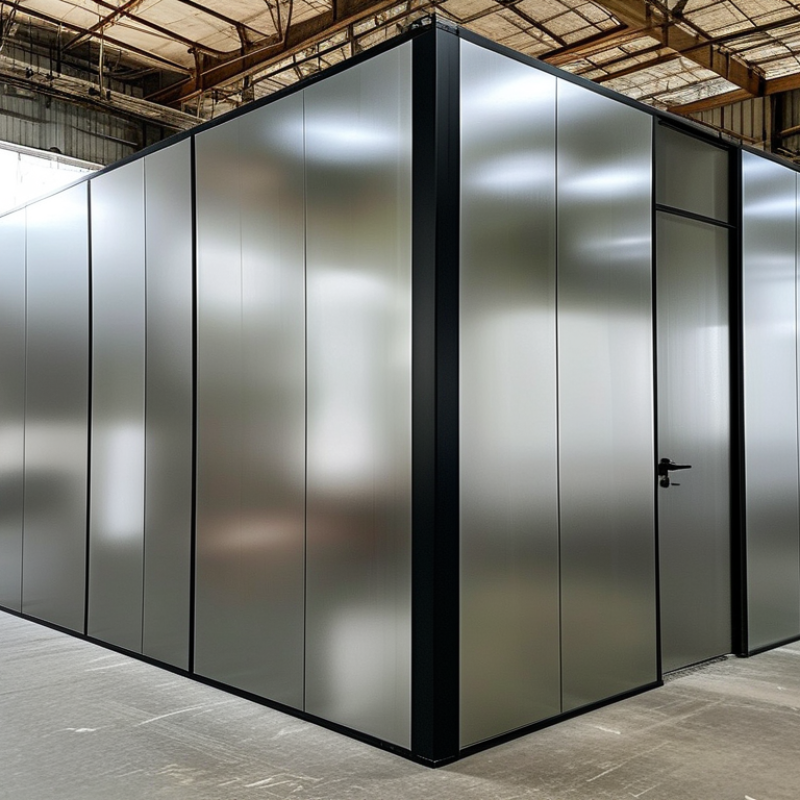
Metal Sheet Partition Walls are non-load-bearing interior systems that divide rooms, guide circulation, and protect building services. Unlike structural walls, they transfer little building weight. They usually combine galvanized steel studs,Sheet Metal Wall Panels, insulation, and a finished surface. Their purpose is practical: create adaptable layouts, improve privacy, and control sound or fire exposure. In a busy workshop, a properly sealed partition can separate cutting dust from a clean assembly area. A 0.8-millimeter steel face can also resist dents better than many lightweight board surfaces. According to the International Energy Agency’s Buildings 2023 report, buildings consume about 30% of global final energy. Partition materials alone cannot solve this burden. However, durable systems can reduce replacement waste and support longer renovation cycles.

The Global Status Report for Buildings and Construction 2023 reports that the sector produces about 37% of global energy-related and process carbon dioxide emissions. This makes material selection more serious. Suppliers should provide declared thicknesses, recycled-content information, fire-test classifications, and acoustic ratings. Mineral wool cores may improve sound control, while carefully sealed joints limit air movement and smoke spread. In offices, removable panels can simplify future changes. In factories, stronger frames and corrosion-resistant finishes may be necessary. Perforated panels look useful, but they do not automatically deliver good acoustics. That is an easy assumption to challenge. The best specification matches panel geometry, core density, moisture exposure, maintenance access, and local code requirements. A low price can hide weak edges, poor seals, or difficult repairs.

Key Materials and Construction Methods

Top Metal Sheet Partition Wall Suppliers Worldwide

Metal sheet partition walls vary by material, thickness, coating, and interior core. Common projects use Galvanized Steel for strength and controlled costs. Aluminum suits humid interiors because it resists rust. Stainless steel serves demanding hygiene areas, but its higher price needs justification. Core choice matters. Mineral wool can improve fire performance, sound control, and thermal stability. In cleanable rooms, sealed surfaces and tight joints reduce dirt collection. Yet thin sheets can dent under heavy impact. This is where specifications need honest review.

01

A dependable assembly begins with accurately fixed floor and ceiling tracks. Install vertical studs at spacing suited to the panel weight and expected loads. Place insulation without gaps or compression. Secure Metal Sheet Wall Panels with compatible screws, clips, or concealed systems. Fasteners should match the panel metal to reduce corrosion risks. Leave controlled movement at long runs and around openings. Seal penetrations carefully, especially near wet zones. On site, I check alignment with a straightedge before closing the wall. That check is easy to skip. It should not be.

Tips: Confirm panel thickness, coating, core density, and edge details before ordering. Request samples. Test a corner joint. Check whether doors, wiring, and service panels fit the planned framing. Allow for expansion, cleaning access, and replacement of damaged sections. A cheaper panel may become expensive after installation errors.

Types of Metal Sheet Partition Wall Systems

Metal sheet partition wall systems vary by core, surface, and installation method. Single-skin panels suit warehouses, service corridors, and low-demand enclosures. They are economical, but sound control remains limited. Double-skin systems place an insulated core between two metal sheets. Mineral wool improves fire resistance and acoustic performance, while rigid foam reduces weight and thermal bridging. Check tested assemblies, not brochure claims.

Demountable systems use mechanical joints instead of permanent wet construction. They support office reconfiguration and reduce downtime during fit-outs. A 2023 UNEP Global Status Report states that buildings consumed about 34% of global energy and produced approximately 37% of energy-related process emissions in 2022. Reusable partition components can support circular design, although transportation and replacement damage can weaken that advantage. The World Steel Association reports more than 680 million tonnes of steel are recycled annually, reinforcing steel’s recovery potential.

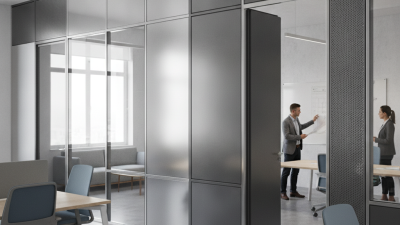
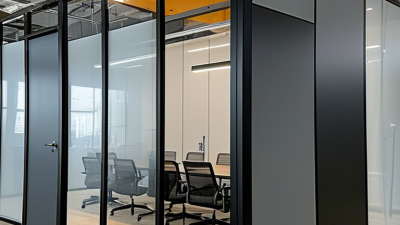
Glazed and hybrid systems combine metal frames with glass, improving daylight and visibility. Solid acoustic panels work better beside meeting rooms or machinery. For exterior boundaries, a Metal Sheet Compound Wall typically uses profiled sheets, galvanized framing, and concrete footings. Wind pressure, corrosion exposure, drainage, and impact resistance need site-specific review. A common mistake is selecting panels by thickness alone. It sounds precise. It is not. Joints, fasteners, fire ratings, and installer workmanship often determine real performance. Fresh project data should be checked against tested standards and local conditions.

Top Metal Sheet Partition Wall Suppliers Worldwide - Types of Metal Sheet Partition Wall Systems
Metal Sheet Partition Wall System Typical Panel Construction Common Sheet Thickness Typical Overall Wall Thickness Acoustic Performance Fire and Moisture Characteristics Typical Applications Key Selection Factors
Single-Skin Steel Partition Profiled or flat galvanized steel sheet fixed to a light-gauge steel frame; the cavity may remain open or receive insulation. Approximately 0.50–1.20 mm steel sheet Approximately 50–100 mm Low to moderate without insulation; improved when mineral wool or glass mineral wool is installed in the cavity. Non-combustible steel facing; actual fire resistance depends on the complete tested assembly, joints, framing and insulation. Warehouses, workshops, service areas, plant rooms and basic internal divisions Impact resistance, corrosion protection, fixing method, panel profile and required access to services
Double-Skin Steel Partition Steel sheets installed on both sides of a galvanized steel stud or track frame, usually with insulation inside the cavity. Approximately 0.50–1.00 mm per face Approximately 75–150 mm Moderate to high, depending on cavity depth, insulation density, joints and surface layers. Suitable for assemblies requiring enhanced fire and acoustic performance when supported by tested construction details. Commercial interiors, industrial buildings, technical rooms and high-traffic areas Stud spacing, board or sheet layout, cavity insulation, deflection head details and door-load requirements
Insulated Metal Sandwich Panel Partition Factory-made metal skins bonded to a rigid or semi-rigid core such as mineral wool, PIR or EPS. Approximately 0.40–0.80 mm per face Approximately 40–200 mm Moderate to high; performance varies significantly with core type, thickness and joint design. Mineral-wool cores generally provide strong fire performance; polymeric cores require product-specific fire testing and classification. Cold rooms, food-processing spaces, clean production areas, factories and logistics buildings Core type, thermal conductivity, hygiene requirements, panel joints, vapor control and cleaning method
Metal Stud and Metal Board Partition Galvanized steel studs and tracks faced with metal-backed boards, steel-faced gypsum boards or other tested lining panels. Metal facing commonly approximately 0.50–0.80 mm; board thickness varies by system Approximately 75–200 mm Moderate to high when multiple layers and cavity insulation are used. Can achieve rated fire resistance only as part of a tested or engineered wall assembly; galvanized components provide corrosion protection in suitable environments. Offices, hospitals, schools, corridors, accommodation and service risers Fire rating, acoustic target, impact class, board layers, service penetrations and finishing requirements
Demountable Metal Partition Factory-finished steel or aluminum panels mounted in reusable tracks, frames or clipped modular grids. Approximately 0.60–1.20 mm metal face, depending on panel design Approximately 60–120 mm Low to moderate; higher performance is available with insulated or double-panel configurations. Panels can be replaced or relocated; fire performance must be verified for the specific modular system and configuration. Offices, laboratories, educational buildings and frequently reconfigured workspaces Relocation frequency, panel access, module size, finish durability, cable management and ceiling connection
Hygienic Steel Partition Continuous or joint-controlled pre-finished galvanized steel or stainless-steel sheets with sealed corners and hygienic trims. Approximately 0.60–1.50 mm metal sheet Approximately 60–150 mm Moderate; acoustic insulation can be added behind the hygienic skin. Easy to wash when correctly detailed; stainless steel and suitable coated steel offer good resistance to moisture and cleaning chemicals. Food processing, pharmaceutical production, healthcare, laboratories and commercial kitchens Surface coating, chemical resistance, joint sealing, wash-down conditions, hygiene certification and drainage details
Stainless-Steel Partition Flat stainless-steel sheets or formed panels fixed to a steel or aluminum support frame, often with sealed joints. Approximately 0.80–2.00 mm stainless-steel sheet Approximately 50–150 mm Low to moderate as a bare skin; higher when combined with a framed, insulated cavity. Excellent corrosion resistance in many wet or hygienic environments; grade selection should match chloride, chemical and temperature exposure. Commercial kitchens, hospitals, laboratories, cleanrooms and marine or coastal facilities Stainless-steel grade, finish, weld quality, galvanic compatibility, cleaning chemicals and impact exposure
Perforated Metal Acoustic Partition Perforated steel or aluminum face panels backed by acoustic fleece, mineral wool or another sound-absorbing layer. Approximately 0.70–1.50 mm metal sheet Approximately 50–150 mm Designed primarily for sound absorption; room reverberation control depends on perforation ratio, backing and installation area. Metal face is non-combustible, but the backing material and complete assembly require separate fire evaluation. Open-plan offices, auditoriums, transport facilities, studios and industrial noise-control areas Perforation pattern, open area, acoustic absorption coefficient, backing material, cleanability and visual design
Movable Metal Operable Wall Hinged or sliding metal-faced modules that can be stacked or repositioned to divide large spaces. Approximately 0.60–1.20 mm metal face, depending on module construction Approximately 80–150 mm Moderate to high when modules include acoustic seals and multilayer internal construction. Fire performance, smoke control and acoustic ratings are system-specific and depend heavily on seals, tracks and module joints. Conference centers, hotels, training rooms, exhibition spaces and multipurpose halls Operating frequency, module weight, floor tolerance, stacking space, acoustic seals and maintenance access
Technical note: Dimensions and performance ranges are typical industry values for preliminary comparison only. Final specifications should be confirmed through the supplier’s technical datasheets, local building codes and independently tested wall-assembly reports. Fire ratings, acoustic ratings, corrosion resistance and thermal performance apply to complete systems rather than to the metal sheet alone.

Major Global Supplier Markets

Major Global Supplier Markets

Metal sheet partition wall suppliers are concentrated across East Asia, Europe, and North America. East Asian markets often provide broad production capacity, competitive pricing, and flexible custom fabrication. European suppliers usually emphasize acoustic performance, fire resistance, recyclable materials, and precise architectural finishes. North American manufacturers commonly serve commercial interiors, healthcare facilities, and large office projects with regional delivery networks.

Other important markets include Türkiye, India, and Southeast Asia. These regions can offer useful combinations of labor efficiency, metalworking experience, and shorter routes to nearby construction markets. Supplier capability still varies widely. A polished website proves little. Buyers should review factory photographs, technical drawings, sample panels, and independent test reports. I have found that small details matter, such as panel flatness, corner alignment, coating thickness, and packaging strength.

Tips: Compare total landed cost, not only unit price. Ask about production lead time, replacement panels, moisture protection, and installation guidance. Request a physical sample before placing a large order. It feels slower. It prevents expensive surprises. Also check whether claimed acoustic or fire ratings match the exact wall assembly, not just one component. A spreadsheet may look complete, yet delivery risks can remain hidden.

How to Evaluate Metal Sheet Partition Wall Suppliers

When evaluating metal sheet partition wall suppliers, start with the wall’s actual job. A warehouse office needs different performance than a clean production room. Ask whether the supplier offers suitable steel grades, sheet thicknesses, core materials, and surface coatings. Confirm fire, moisture, acoustic, and impact requirements with documented test reports. Technical data should match the proposed panel, not a generic product family.

Supplier experience must be visible in details. Request project references, installation photographs, shop drawings, and quality records. Check how panels are cut, edged, joined, and protected during transport. Poor corner protection can create expensive damage before installation begins. Ask about dimensional tolerances, replacement parts, lead times, and on-site technical support. A capable supplier should explain limitations clearly, rather than promise that every condition is easy.

Review traceability and communication before signing an order. Batch numbers, inspection records, coating specifications, and written warranty terms improve accountability. Compare quotations line by line, including framing, doors, trims, delivery, and installation. Do not accept a polished brochure as proof. One common mistake is choosing the lowest price before checking hidden accessories and labor. That approach can fail. Speak with recent customers about delivery accuracy, defect handling, and response times. If a supplier avoids specific answers, treat that hesitation as useful evidence. Get critical assumptions in writing, even when the relationship feels reliable.

Installation, Maintenance, and Safety Considerations

Top Metal Sheet Partition Wall Suppliers Worldwide

Installation, Maintenance, and Safety Considerations

Reliable installation begins with an accurate site survey. Check floor levels, wall alignment, and ceiling heights before ordering panels. Small errors can create visible gaps around doors and corners. Experienced installers use calibrated tools and follow the supplier’s approved fixing method. A Sheet Metal Wall Covering should sit firmly against a clean, dry substrate. Leave movement space where the specification requires it. Do not force panels into place. Rushed fitting may look acceptable initially, but it can cause buckling later. This is an area worth reconsidering during inspection.

Maintenance is simple when damage is addressed early. Wipe metal surfaces with a soft cloth and a mild, non-abrasive cleaner. Remove moisture from joints, especially in washrooms or near exterior entrances. Inspect screws, trims, seams, and protective coatings every few months. Sharp edges need prompt repair or controlled replacement. Safety also depends on correct handling. Workers should wear cut-resistant gloves, eye protection, and suitable footwear. Panels must be stored upright and secured against falling. Confirm fire, acoustic, and load requirements through current technical documents and local construction rules.

Tips: Keep spare fasteners and matching trim on site. Photograph concealed services before drilling. Recheck panel alignment after the first completed section. Small checks prevent expensive corrections.

Pre-painted Corrugated Steel Sheet: Benefits, Applications, Selection, and Installation Guide

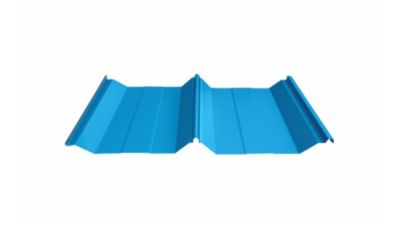
Pre-painted corrugated steel sheet combines a high-strength steel substrate with protective metallic and organic coatings, creating a lightweight solution for durable architectural cladding. Used as metal roofing sheet on sloped roofs or metal wall cladding panel on façades, it is widely applied to industrial buildings, logistics warehouses, workshops, temporary facilities, and agricultural structures. Its low weight can simplify transportation and reduce structural loading, while factory-applied coatings provide consistent color, weather resistance, and corrosion protection. The World Steel Association reports that more than 680 million tonnes of steel are recycled globally each year, supporting steel’s strong circularity credentials.

Selection should consider the building environment, roof pitch, rainfall, wind exposure, and required service life. Coating systems should be matched with the relevant corrosion category under ISO 12944, while substrate thickness, rib profile, fastening method, and thermal requirements should be checked against local building codes. Light or reflective colors may also help reduce solar heat gain; studies summarized by the U.S. Department of Energy indicate that cool-roof strategies can lower cooling energy use in suitable buildings. During installation, panels should be stored dry, aligned with the prevailing wind and drainage direction, and fixed using corrosion-resistant fasteners with correctly seated washers. Cut edges should be protected, metal swarf removed promptly, and overlaps sealed where required to prevent water penetration and premature corrosion.

FAQS

: What materials are commonly used for metal sheet partition walls?

: Galvanized steel offers strength and controlled costs. Aluminum resists rust in humid interiors. Stainless steel suits hygiene-focused spaces, but costs more.

How should I choose the wall core?

Mineral wool can improve fire performance, sound control, and thermal stability. Rigid foam can reduce weight and thermal bridging.

Are thin metal panels always a good choice?

Not always. Thin sheets can dent under heavy impact. Review expected loads, joint design, and replacement needs carefully.

Which partition system suits an office that may change later?

Demountable systems use mechanical joints. They support reconfiguration and reduce fit-out downtime. Replacement damage can reduce their sustainability advantage.

What should be checked before ordering panels?

Confirm thickness, coating, core density, and edge details. Request samples. Test a corner joint.

How can installation problems be prevented?

Survey floor levels, wall alignment, and ceiling heights first. Fix tracks accurately. Check alignment with a straightedge before closing the wall.

How should metal partition walls be maintained?

Wipe surfaces with a soft cloth and mild cleaner. Remove moisture from joints. Inspect screws, trims, seams, and coatings every few months.

What safety practices matter during installation?

Workers should use cut-resistant gloves, eye protection, and suitable footwear. Store panels upright and secure them against falling.

Does panel thickness determine wall performance?

No. Joints, fasteners, fire ratings, and workmanship also matter. Thickness alone can create false confidence. Test data deserves another review.

Conclusion

Metal Sheet Partition Wall systems provide practical, durable solutions for dividing interior spaces in commercial, industrial, institutional, and utility environments. They are designed to improve space organization, privacy, fire resistance, acoustic performance, and operational efficiency. This overview explains common materials, including galvanized steel, stainless steel, aluminum, insulation cores, and protective coatings, as well as construction methods such as framed, modular, prefabricated, and panel-based installation. It also introduces different system types, including solid, insulated, demountable, hygienic, and fire-rated partitions.

The article reviews major supplier markets worldwide and outlines how to evaluate suppliers based on material quality, manufacturing capacity, customization, certifications, delivery reliability, technical support, and total project cost. It also highlights essential installation, maintenance, and safety considerations, including accurate site measurement, secure fixing, proper joint treatment, corrosion prevention, routine inspections, and compliance with applicable building and workplace standards. Together, these factors help buyers select a dependable solution that balances performance, durability, safety, and long-term value.

Sophia

Sophia

Sophia is a dedicated marketing professional with a deep expertise in the diverse product offerings of her company. Specializing in galvanized coils, galvalume coils, ZAM coated coils, pre-painted steel coils, light steel keels, C/Z/U profiles, color steel roofing sheets, and hand-made cleanroom......
Previous China Top Roof Soffit Panels Manufacturers?