
















Prepainted Corrugated Steel Sheet for Roofing and Wall Cladding: A Complete Guide
A roof or wall panel isn't just about covering a building. It has to stand up to rain, sun, temperature swings, wind, and often years of outdoor exposure with little maintenance. That's exactly where prepainted corrugated steel sheet comes in.
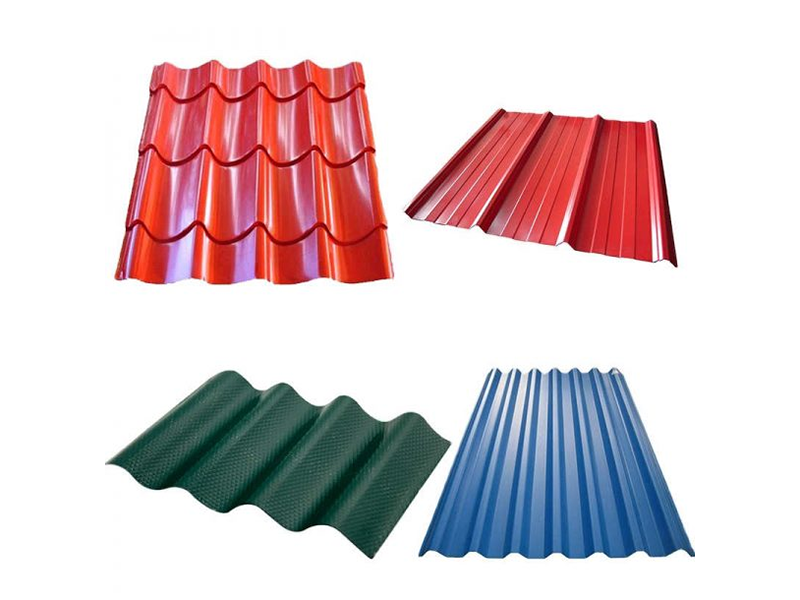
You might also hear it called color coated corrugated steel sheet or pre-painted metal roofing sheet. Basically, it's a steel base with a metallic protective coating and a paint layer, roll-formed into a corrugated or ribbed profile. What you get is a panel that's fairly light, strong enough, resistant to corrosion, looks clean, and is easy to install.
What Is Prepainted Corrugated Steel Sheet?
The process usually starts with either galvanized or Galvalume Steel. After surface treatment, primer and topcoat go on through a continuous coil-coating line. Then the painted coil is roll-formed into the profile you need and cut to length.
The coating you pick makes a difference. PE is the common choice for general use where cost and flexibility matter. SMP and HDP give you better weather resistance. And PVDF is what you go for when long-term UV resistance and color retention are critical.
The substrate is just as important. PPGI is built on Galvanized Steel, while PPGL uses an aluminum-zinc coating. PPGL tends to handle tough outdoor conditions better, but PPGI is still a practical choice for many standard roofing and wall jobs.
Why the Corrugated Profile Matters
Take a flat steel sheet and try to span a roof with it — it'll flex and sag. Run that same sheet through a roll former, though, and everything changes. Those ribs do a lot of work. They add stiffness, and they do it without forcing you to jump up in thickness. That's the whole reason corrugated steel is such a natural fit for big roofs and long runs of wall cladding.
Now, profiles aren't all the same, and they're not meant to be. Some have a lower wave — that gives you a tidier, more architectural look. Others go deeper on the rib, which usually means more rigidity and a higher load capacity. Neither is better. It just depends on what the building needs.
Ecosteel Source, for example, carries profiles like YX28-190-760, YX30-175-1050, YX25-200-1000, YX35-335-1010, and YX25-215-860 and more specification for roofing and walls. Look closely and you'll see they differ in rib height, pitch, and effective cover width. So swapping one for another isn't as simple as it sounds. Span, loading, how it gets fixed, and the look you're after — all of that decides which profile actually works.
Typical Specifications
Prepainted corrugated sheets come in various thicknesses, widths, colors, and coating systems. Ecosteel Source's range covers different effective widths and can be customized to your project.
As a reference, their corrugated products run from 0.1 to 0.8 mm thick, with effective widths of 665, 750, 815, 840, 900, 925, 1020, and 1050 mm, depending on the profile. Length is customizable too, based on your order and shipping needs.
Common paint systems are PE, SMP, HDP, and PVDF. You can also specify RAL colors and custom finishes to match architectural requirements.
Don't look at these specs in isolation. A thinner sheet with a deep, well-designed profile can perform differently from a thicker sheet with a shallow profile. Steel grade, coating weight, profile geometry, and the building's structural system all need to be weighed together.
Color Preferences Vary by Market
Color preferences can vary considerably between markets and are often influenced by local architecture, climate, and building style. In the UAE and wider GCC market, white and black lead the way — white for heat reflection, black for a sharper modern look. Southeast Asia leans toward brighter blues, greens, and reds. Africa tends to favor blue, brick red, and brown. Europe sticks with muted greys and dark neutrals. And in North America, black, charcoal, and grey are the top choices.
Where Is It Used?
The most common use is metal roofing. You'll see prepainted corrugated sheets on warehouses, factories, logistics centers, farm buildings, and commercial facilities. Their light weight also makes them easier to handle and install on big projects.
They work just as well for wall cladding. Trapezoidal and ribbed profiles give you a clean facade while protecting the building from the weather. Depending on the design, you can also combine them with insulation or Sandwich Panel systems.
Other uses include temporary buildings, fencing, equipment enclosures, and architectural cladding.
How Should You Choose?
Let's be honest: there's no such thing as the "best" corrugated steel sheet. What works for one building could be wrong for the next one.
Start with where it's going. A typical industrial building in a mild climate? PPGI with a PE or SMP coating is usually a sensible call — decent performance without overspending. But put that same building near the coast, or somewhere with brutal UV, or on a project that needs to last decades — now you're looking at PPGL or a higher-grade coating. It costs more upfront, but it earns that back over time.
Once the material is sorted, move on to the profile. Before you pick a model, check the span, wind exposure, how it'll be fixed, the effective cover width, and how water will drain off it. Those five things will narrow your options fast.
Then there's the paperwork side — steel thickness, metallic coating, paint system, color, sheet length. Easy to overlook, but they all affect the final result.
So not a prepainted corrugated sheet isn't just colored metal. It's the substrate, the coating, the profile, and how well it's made — all working together. Nail those four, and you've got a roof or wall that holds up for years. Get one wrong, and you'll know about it.