


What Is Galvalume Steel? Material, Grades, Properties, and Applications
What's Actually in Galvalume Steel?
What sets it apart is the coating. A typical Galvalume coating is roughly: 55% aluminum, 43.4% zinc, 1.6% silicon. Each element does its own job. Aluminum creates a protective barrier and handles heat well. Zinc provides sacrificial protection — it corrodes first to protect the steel if the coating gets scratched. Silicon helps the coating stick to the steel and prevents brittle layers from forming between them.
Together, these give Galvalume good corrosion resistance and decent heat reflectivity, which is why it's a popular choice for outdoor applications.
In commercial specs, you'll commonly see grades like DX51D, DX52D, DX53D, DX54D, S250GD, S350GD, and S550GD. Generally, the DX series relates to formability, while S‑series grades are picked based on yield strength requirements. For instance, DX51D is a general‑purpose forming grade, whereas S350GD or S550GD are better suited for load‑bearing structural applications.
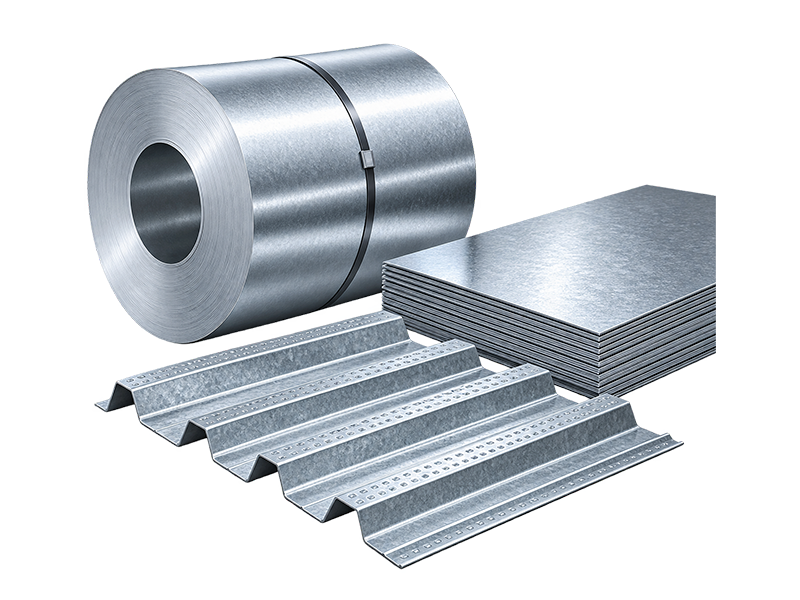
Understanding AZ Coating Grades
Another key part of the spec is the AZ designation. Take DX51D+AZ150 – the "DX51D" is the steel grade, and "AZ150" means the coating weight is about 150 g/m² total on both sides of the sheet.
Common designations include AZ50, AZ100, AZ150, and higher. A heavier coating generally means better corrosion protection, but you don't always need the heaviest option. For indoor or mild exposure, a lighter or medium coating is often perfectly fine. For roofing, humid climates, or tough outdoor conditions, it's worth going heavier.
Key Properties of Galvalume Steel
Its biggest advantage is the dual protection system. The aluminum‑rich coating acts as a physical barrier against moisture, while the zinc provides electrochemical protection when the steel gets exposed. Choose the right grade and coating weight, and you get strong long‑term durability in most atmospheric conditions.
Other handy features:
Good corrosion resistance
Solid heat and oxidation resistance
High thermal reflectivity – helps keep buildings cooler
Decent surface appearance
Good formability and processability
Works well with painting and colour coating
That reflective surface is especially valuable for roofing – it reduces heat absorption and can improve a building's thermal performance.
Where Is It Used?
You'll find Galvalume Steel across a range of industries. Common applications include:
Metal roofing and corrugated sheets
Wall cladding and building panels
Industrial and commercial buildings
HVAC and ventilation systems
Home appliance components
Storage facilities and industrial equipment
It's also a common substrate for pre-painted Galvalume (PPGL), which is used when both corrosion protection and a decorative finish are needed.
Galvalume vs. Galvanized vs. ZAM
The main difference comes down to the coating.
Galvanized Steel has a mostly‑zinc coating. It's cost‑effective and widely used for general corrosion protection.
Galvalume Steel uses an aluminum‑zinc‑silicon alloy. It offers a good balance of corrosion resistance, heat resistance, and reflectivity – making it a favourite for roofing and building applications.
Zam Steel contains zinc, aluminium, and magnesium. It's chosen for applications needing enhanced corrosion protection, especially around cut edges and in demanding environments.
So which one is right? Galvanized is often the budget choice, Galvalume gives you a strong balance of durability and cost, and ZAM is for when you need extra protection.
Final Thoughts
Galvalume is more than just "coated steel." Its performance depends on getting the combination of substrate, grade, coating weight, processing, and service environment right. Match those to your project needs, and you'll get the right balance of strength, formability, corrosion resistance, and service life.