


GI Steel: A Practical Guide to Galvanized Steel Coil and Sheet
If you work in construction or manufacturing, you've probably handled GI steel at some point.
It's one of those materials that just works — steel strength and workability, plus the corrosion protection of zinc. That combination makes it a go-to choice when you need durability without blowing the budget or making fabrication a nightmare.
So how is it made? The steel strip goes through a bath of molten zinc — that's the hot-dip process. The zinc bonds tightly to the surface, forming a barrier against moisture and oxygen. But here's the clever part: zinc also protects sacrificially. If the coating gets scratched and the steel underneath is exposed, the zinc around it will corrode first, keeping the steel safe.
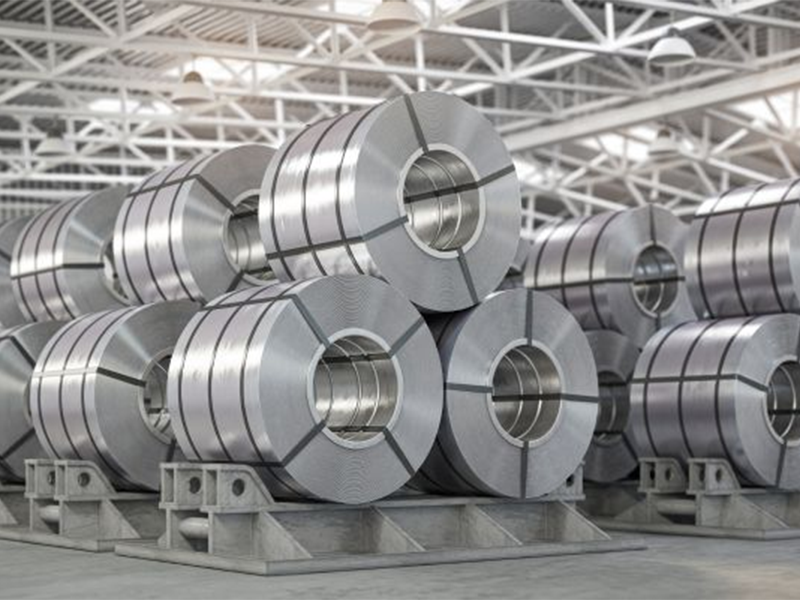
What Is GI Steel?
GI steel comes in two main forms: coil and sheet. Coils are the starting point for further processing. Sheets are made by leveling and cutting coils to length. From there, you can slit it into narrow strips, cut to size, bend it, stamp it, form it, or run it through a profiling line.
Thickness and width vary widely. Galvanized Coils typically range from around 0.1 mm up to several millimeters. Zinc coating weights are chosen based on how much corrosion protection you need. At Ecosteel Source, we supply galvanized sheet from 0.12 mm to 6.0 mm, with zinc coatings from 30 g/m² to 920 g/m², depending on the application.
Standards? You'll see ASTM A653, EN 10346, JIS G3302, and Chinese GB specs. Common grades include DX51D, DX52D, SGCC, and structural grades like S350GD and S550GD.
Why Is GI Steel So Widely Used?
It's all about balance. GI steel gives you solid corrosion resistance without the weight or cost of many alternatives. The steel substrate still has good strength, formability, and fabrication characteristics.
Depending on the grade and coating, you can cut, bend, punch, stamp, and form it for all sorts of manufacturing processes. Coating weight matters too — heavier coatings for harsh environments, lighter ones for indoor or mild conditions.
Another plus: it's versatile downstream. Coils can be slit or flattened into sheets. Sheets can become roofing panels, wall cladding, ducts, structural components — you name it.
Common Applications
GI steel shows up in a lot of industries.
In construction, it's everywhere: roofing, wall cladding, ventilation ducts, steel enclosures, framing. In automotive, you'll find it in body panels, chassis parts, door frames — anywhere corrosion resistance is key.
Home appliances? Refrigerator panels, washing machine housings, air-conditioning units. And beyond that: shipping containers, electrical cabinets, machinery housings, warehouse systems, agricultural equipment, telecom enclosures.
If you need a textured surface, embossed Galvanized Steel is an option. You can get linear, diamond, or custom patterns — good for step plates, vehicle floors, industrial platforms, container floors, anything that needs extra grip or a distinctive look.
How to Choose the Right Galvanized (GI) Steel
There's no single spec that works for every job. The right GI steel really depends on where it's going, what it's up against, and how you plan to process it.
Start with the environment. Indoors and dry? A standard zinc coating is usually fine. But if it's heading outside — especially somewhere humid, coastal, or industrial — you'll want a heavier coating. More zinc generally means longer protection before rust becomes an issue.
Grade and thickness matter just as much. DX51D and DX52D are common picks for bending, stamping, and roll forming. If you need structural strength, higher grades are worth looking at. And thickness should be driven by the load, rigidity, and design of the final part — not just what's sitting in the warehouse.
Then there's the surface. Regular GI has that visible spangle pattern. Zero-spangle is smoother and more uniform. If you're going to paint or colour-coat the steel, zero-spangle usually gives you a better base. Surface quality becomes a lot more important at that point.
For further processing, most people buy GI coil. It's what you run through slitting, cutting, roll forming, or stamping. And if you need a textured surface — for grip or just a different look — embossed GI is an option.
The bottom line? The best GI steel isn't the one with the thickest coating or the highest strength number. It's the one that fits the job. Get the balance right between corrosion resistance, strength, formability, and cost, and you've got a material that performs the way you need it to.